


Words from CEO
George
Words from the Disability Inclusion Crew
Kevin and Peter
Words from
Kay
“FIRE, FIRE… EVACUATE THE BUILDING !!!”
When you hear these words, you start panicking. All you want to do is to get to safety immediately.
Hi everyone… today’s topic is emergency preparedness.
I recently attended a workshop offered by Solution Ideas on the topic of ‘How prepared are you in an emergency?’ It was an eye opener. The workshop made me think about how prepared I really am. I was shocked to realise that I was unprepared for an emergency. Today I will be sharing my experiences of how I have dealt with emergencies in the past. I will also share some of what I have recently learned and how I am putting this into practice in my own life.
Imagine if a fire broke out where you live or work. Ask yourself the question: How prepared am I? What do I do at that moment? What items do I grab? Where can I stay? Who do I call?
In the workshop I learned that It’s good for every household to have an Emergency Plan. More about that later.
There are many types of emergencies. I’ve come across a few in my life.

In 2019 we had a blackout for almost a week due to a tree falling on the power line as the result of a very strong wind. We had to borrow power from my neighbour who was not affected by the outage and still had electricity. We needed power at night because we have two electric wheelchairs that need charging, one bi-pap machine, and two electric beds with two hoists that all need charging. We also have mobile phones that need to charge so we can communicate. We used a portable gas stove for cooking or reheating food during the day and used electricity to make coffee and tea.
The blackout lasted 5 days. It was hard because it meant that we were out of our comfort zone and we were limited to doing things around the house.
When we finally got our electricity back that’s when we told ourselves that if it was to happen again, we would be prepared. This is when we bought a generator as an alternative source of electricity if the grid fails.
In 2021 during the floods in Sydney, it was raining heavily for a few days. A water pipe burst and flooded my street. It was all over social media.
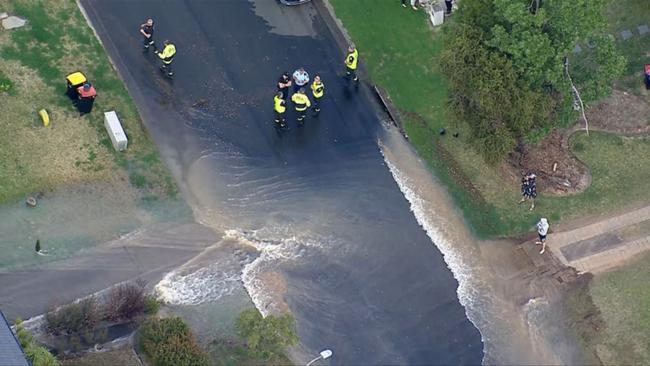
Luckily it flooded on the other end of my street, however the thought of this happening right close to home was scary.
In the emergency preparedness workshop, I learned that it is important to have strategies to evacuate your home in an emergency like a fire or flood.
I’ve been living at home in Public Housing with my brother (who uses an electric wheelchair as well) and mother for almost 21 years. When we moved in there was only one ramp at the back that leads into the house. In the front of the house there are three steps so we can only enter the house through the side gate and up the ramp at the back.
It came to my attention that if there was a fire at the back of the house, how would both myself and my brother get out? What would happen if our only exit was closed off and we could not access the one ramp for our wheelchairs?
We requested that Housing put in a ramp in the front of the house, but they did not approve this. They told us that one ramp per house is what the law says. However, we feel that this is a safety issue in an emergency and we are willing to fight this case. With the support of our occupational therapist, we have reached out to the NDIS and await approval.
The workshop made me realise how unprepared I was in case of an emergency. It was also helpful in identifying our rights and how to fight for them.
Other important points I learned from the workshop are:
• What to do when an emergency occurs especially when you are a wheelchair user like myself.
• To pack a bag with important essentials so you just grab and go.
• Have a backup safe place to stay
• Remain calm, don’t stress and be prepared
Everybody’s situation is different and it is important for us all to have an Emergency Plan. I hope that this article gets you motivated to start thinking about and planning your own.
Emergency Preparedness – Kay
Over April and May we had ‘taste-tester’ to workshop sessions from Belong Blue Mountains.
Words from our Disability Inclusion Officer
Abrahim
Belong Blue Mountains
Emergency Preparedness!
Our Inclusion Café about Emergency Preparedness, hosted by Belong Blue Mountains.
Are you ready for an emergency event?
Australia is witnessing more frequent and severe disaster events. Bushfires, floods, extreme heatwaves, cyclones and pandemics have caused fatalities, injuries and loss around the country. Repeated emergencies have highlighted the disproportionate impact of disasters on people with disabilities.
The Be Ready Team are here to help you be better prepared for emergencies. Our goal is to increase your emergency preparedness incrementally and ensure you and your support network are aware, capable and prepared.
Preparedness is a process, not a one-time event!
P-CEP (person-centered Emergency Preparedness) a 3.5hour Workshop to create your Emergency Preparedness Plan, coming soon!!!!
Solution Ideas Ability Boutique
Findings from the Emergency Preparedness Inclusion Cafe

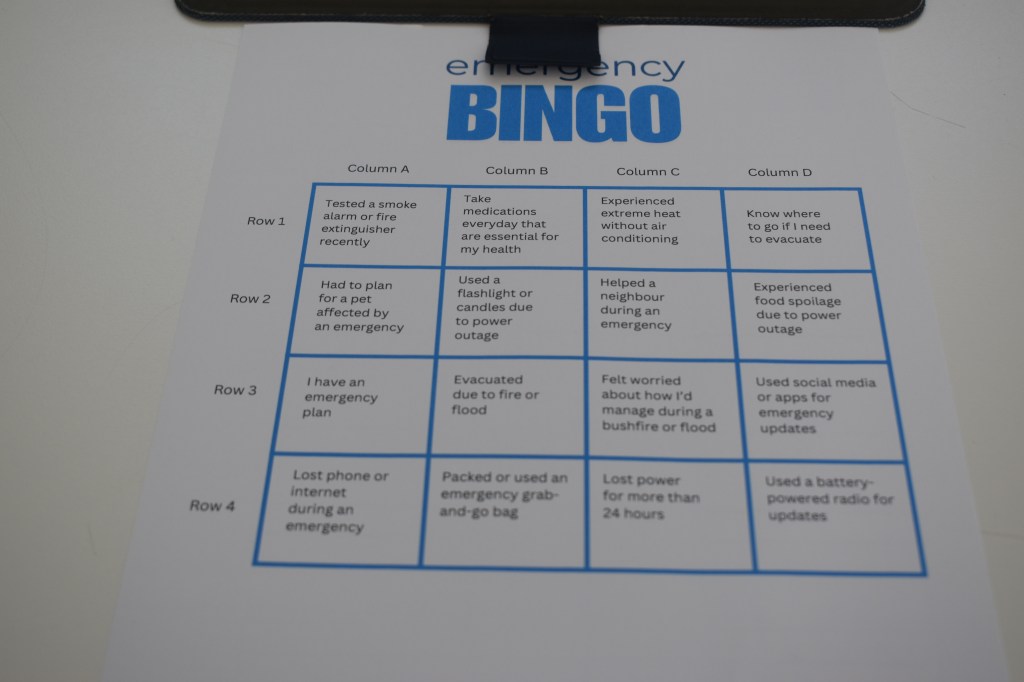

What do you do when no SES and police turn up to your door during an emergency, but I have a disability!? Here is a brief about what we understand after our Inclusion Cafe conversation about Emergency Preparedness, meaning preparing for an emergency…
People with Disability are at greater risk of harm during an Emergency.
During emergencies –
- people with disability are normally forgotten
- take longer to recover
- face accessibility issues at evacuation centers.
P-CEP (person-centered emergency preparedness) is an opportunity to prepare a plan for an emergency with the guide of an emergency wheel.
Preparation and planning your personal emergency plan is about YOU and your needs.
Lets not forget that over last couple of years, in Australia let alone NSW alone, we have faced fires, a pandemic, floods and extreme weather. All these events have come at the cost of loosing lives.
Must do’s –
- test smoke detectors twice a year – use day light saving to mark your test dates.
- avoid social isolation, the more connected you are, the safer you are in the event of an emergency.
- your preparation is like ‘an assistant to talk through’ what you need to do in preparing for an emergency
- ‘communicate within’ to focus and stay calm
- be familiar with venues or places you can go to in the case of an emergency because evacuation centers may not be accessible.
Stay Safe Everyone!
 Solution Ideas Ability Boutique
Leave a comment